
Co-written by Disability Rights Fund, Impatience Earth, and Global Greengrants Fund
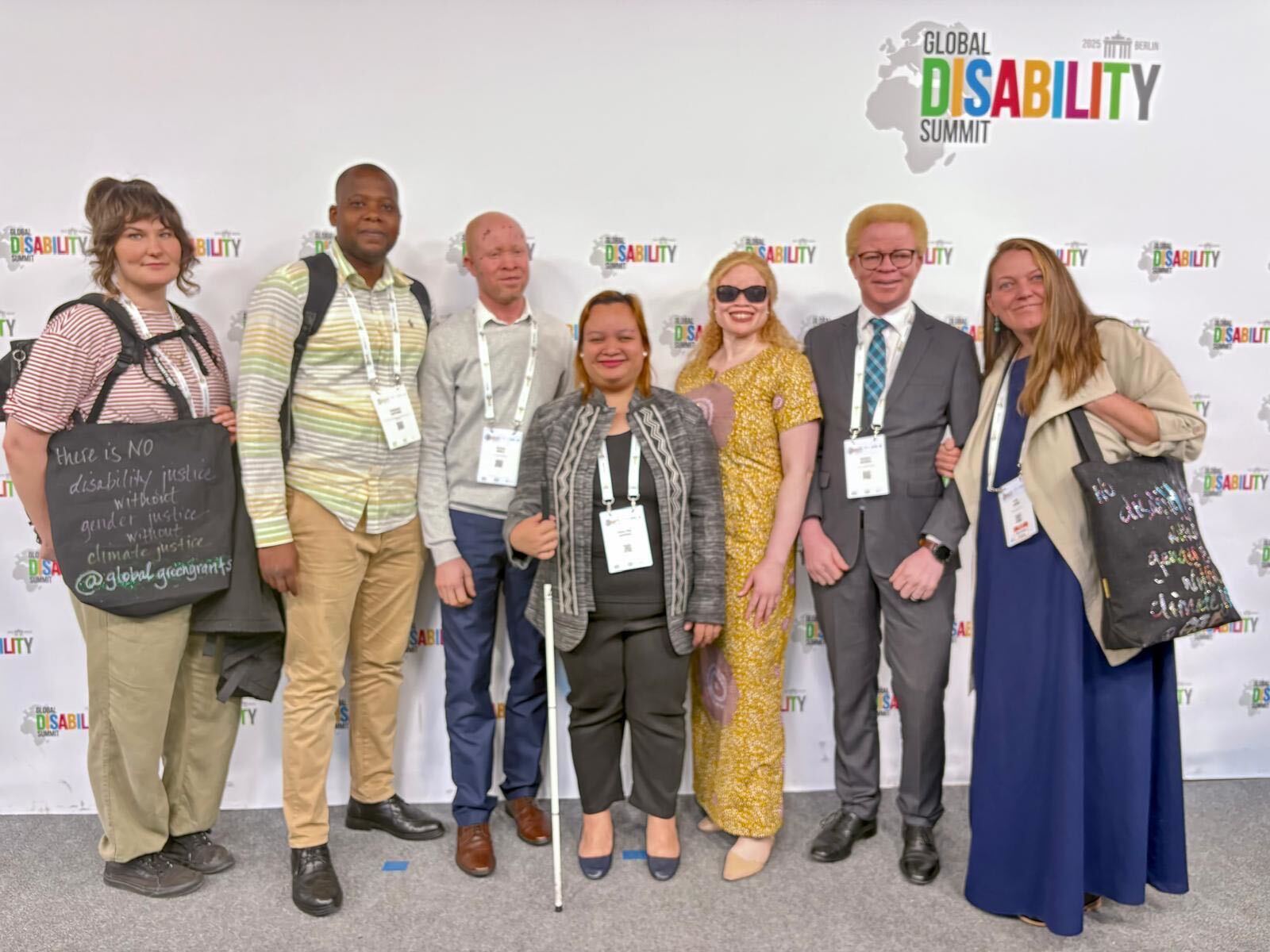
The climate crisis is already reshaping lives and landscapes around the world. But as philanthropy races to fund climate mitigation, adaptation, and resilience, one critical truth remains too often overlooked: climate justice is impossible without disability justice.
That was the central call emerging from a recent webinar, “Mind the Margins, Max the Impact: Finding the way to inclusive, intersectional climate philanthropy,” co-organized by Disability Rights Fund, Impatience Earth, and Global Greengrants Fund, that convened leaders from philanthropy, grassroots organizing, and disability justice movements to discuss what truly disability-inclusive climate action requires—and what funders must do differently to support it.
For many participants, the conversation was not simply about equity. It was about effectiveness, systems change, and the future of climate philanthropy itself.
As B de Gersigny, Vice President of External Relations at Global Greengrants, put it:
“When climate adaptation systems are inaccessible, they’re not only unjust, but they’re also deeply ineffective.”
This reality led Impatience Earth, Impatience Wellbeing, Disability Rights Fund, and the Climate Justice-Just Transition Collaborative to forge a partnership to explore the obstacles and opportunities at this intersection. Out of that collaboration came a participatory research project to produce “Investing in Disability-Inclusive Climate Justice: A guide for funders,” which featured Global Greengrants Fund, Ford Foundation, and Africa Albinism Network—and inspired this second webinar. Read about the first one here.
Across the recent discussion, speakers challenged the persistent framing of disability as a parallel or niche issue within climate work. Instead, they argued that disabled communities are already leading some of the world’s most innovative, resilient, and community-rooted climate solutions—often without adequate recognition or resourcing.
For Disability Rights Fund, a similar picture was emerging from the ground up, as more disability-led organizations began applying for funding tied directly to climate justice work. One example shared by Myroslava Tataryn, Chief of Movements Division at Disability Rights Fund early in the webinar, was Hope Alive for Possibilities Initiative (HAPI), a disabled women-run organization in Benue State, Nigeria. After successfully advocating for disability legislation in their state, the organization’s next step was climate policy advocacy—pushing for disability and gender justice to be embedded into climate disaster response and state climate planning.
Yet despite this work, many climate funders still do not recognize these efforts as climate justice.
That disconnect became a recurring theme throughout the conversation.
Catherine Hyde Townsend of the Ford Foundation named some of the unspoken tensions many philanthropic institutions wrestle with internally:
“There’s something about working on disability rights and inclusion that makes people deeply uncomfortable.”
She described common institutional barriers: leadership that does not prioritize disability inclusion, uncertainty about what disability-inclusive grantmaking actually looks like in practice, and a tendency to “listen to the field” while failing to recognize how disabled communities have historically been excluded from the very spaces philanthropy relies on to shape strategy.
But rather than positioning disability inclusion as an additional burden, Townsend reframed it as a transformative opportunity for philanthropy and movements alike:
“This isn’t about just helping people with disabilities… This is about helping the climate justice movement.”
She pointed to practical examples that emerged from disability organizing—captions, easy-read materials, participatory decision-making processes—that improve accessibility and participation for everyone, not just disabled communities.
This emphasis on movement-wide transformation echoed throughout the webinar.
Global Greengrants shared its own institutional journey. Eight years ago, the organization realized that despite its commitment to funding frontline climate justice movements, disability inclusion was not meaningfully embedded in its grantmaking. What began with anti-ableist training and self-reflection eventually evolved into the creation of a Disability Rights and Climate Justice Advisory Board, composed of disability activists who make grant decisions directly.
The impact was significant. Funding at the disability-climate intersection grew from roughly $40,000–$50,000 annually to more than $1.5 million in recent years.
Importantly, they stressed that this evolution did not emerge from a perfectly designed strategy:
“We didn’t arrive at the intersection of disability and climate with a strategy. What we arrived at was an understanding that we needed to do better.”
That willingness to learn—and to remain accountable while learning—surfaced repeatedly as one of the most important lessons for funders entering this space.
Nowhere was the urgency of this work more tangible than in the remarks from Bonface Massah, Executive Director of the Africa Albinism Network (AAN)—a grantee partner of Disability Rights Fund and Global Greengrants. Massah described how his organization’s climate work emerged from the lived realities of people with albinism across Sub-Saharan Africa.
For years, AAN focused primarily on human rights violations, including ritual killings and violence targeting people with albinism. But climate change forced the organization to confront another escalating threat: heightened risk of skin cancer intensified by rising temperatures and UV exposure.
“There is a certain killer that is making the majority of us die silently across our communities… and this is skin cancer.”
AAN responded by launching a petition supporting a global campaign advocating that the World Health Organization (WHO) recognize sunscreen as an essential medicine—not a luxury product, but a climate adaptation necessity and an assistive device for people with albinism. The petition reached more than 4,000 people across 99 countries and contributed to the global campaign’s success as the WHO re-added broad-spectrum sunscreen to the Essential Medicines List late last year.
At the same time, AAN has pushed for stronger representation of disabled people within global climate negotiations, participating in COP summits and broader UNFCCC advocacy spaces.
For Massah, however, participation alone is not enough:
“We have been honest with most of our partners… for us to consistently engage in climate change, we need resources.”
That distinction between one-off inclusion and sustained investment became another defining thread of the conversation. Funders were repeatedly encouraged to think beyond project-based grants and toward long-term leadership development, technical capacity building, participatory grantmaking, and sustained movement infrastructure.
Eilesh Fleming of Barnwood Trust described how her organization—a place-based disability and mental health funder in Gloucestershire, England—has begun grappling with these same questions.
Barnwood Trust’s journey into climate justice began not with expertise, but curiosity. After signing the UK Funder Commitment on Climate Change, the organization commissioned Impatience Earth to conduct research exploring how climate change disproportionately affects disabled and neurodivergent communities in the UK. The findings reframed climate change as fundamentally a rights issue.
Fleming described the process as intentionally messy:
“There’s no right or wrong to how you tackle this. You just need to tackle it.”
Rather than separating climate, disability, gender, racial justice, and mental health into siloed categories, Barnwood Trust has leaned into intersectionality and systems thinking. The organization increasingly asks how funders can support informal grassroots movements, share decision-making power with people with lived experience, and help scale local innovations into broader structural change.
Underlying all of these reflections was a deeper challenge to philanthropy itself: whether climate funding models are prepared to move resources differently.
The conversation repeatedly returned to the idea that some of the most innovative climate solutions emerge not from mainstream institutions, but from communities historically pushed to the margins. And when philanthropic funding comes from the margins, speakers argued, it strengthens entire movements.
Yasmin Ahammad of Impatience Earth made a clear call to action:
“If you feel that you’re galvanized by this discussion and you want to learn by doing, I encourage you to just fund.”
de Gersigny reflected toward the close of the conversation:
“When you fund in the most inclusive ways, you build the most sustainable, durable social movements.”
For funders navigating increasingly urgent climate realities, that insight may be one of the most important takeaways of all.
Disability-inclusive climate philanthropy is not simply about representation or compliance. It is about building climate movements capable of responding to the complexity of the crises ahead—movements rooted in interdependence, resilience, participation, and justice.
Perhaps the question is no longer whether philanthropy will fund this work. It is whether climate philanthropy can succeed without it.
Key Takeaways for Funders
1. Disability justice is essential to effective climate action. Disabled people are not separate from climate movements—they are already leading critical work around adaptation, resilience, accessibility, health, and community survival, as well as mitigation. Climate solutions that exclude disabled people are both unjust and less effective.
2. Fund from the margins to strengthen entire movements. Some of the most innovative and community-rooted climate solutions are emerging from grassroots disability-led organizations that remain significantly underfunded. Inclusive funding creates stronger, more durable climate movements overall.
3. Move beyond one-off grants toward sustained investment. Disability-inclusive climate work requires long-term support for leadership development, organizational capacity, policy advocacy, research, and participation in global climate spaces—not short-term project funding alone.
4. Participatory and lived-experience-led funding models matter. Advisory boards, participatory grantmaking, and consultation with disability-led organizations help funders make better decisions, shift power more meaningfully, and build accountability into climate philanthropy.
5. Funders do not need perfect expertise to begin. Speakers emphasized that humility, curiosity, experimentation, and a willingness to learn are more important than having all the answers. Meaningful progress starts when institutions commit to engaging the work honestly and consistently.
Global Greengrants and Disability Rights Fund are intermediary funds with the grantmaking infrastructure to channel resources directly to disability-led climate organizations on the ground, without needing to build from scratch. And for funders who want guidance before they give, Impatience Earth offers pro bono advisory services to help navigate the climate-disability intersection. The pathways are there. What’s needed now is the funding.
Learn more from this list of resources. Funders interested in exploring disability-inclusive climate philanthropy more deeply are encouraged to reach out to the speakers and organizations featured in this conversation to continue learning, build relationships, and imagine what more transformative and inclusive climate funding could look like together.
To learn more about each organization’s work, reach out directly to:
Jen Bokoff jbokoff@disabilityrightsfund.org
Raysa França raysa@impatience.earth
Bonface Massah bon@africaalbinismnetwork.org
Faith Lemon faith@greengrants.org