
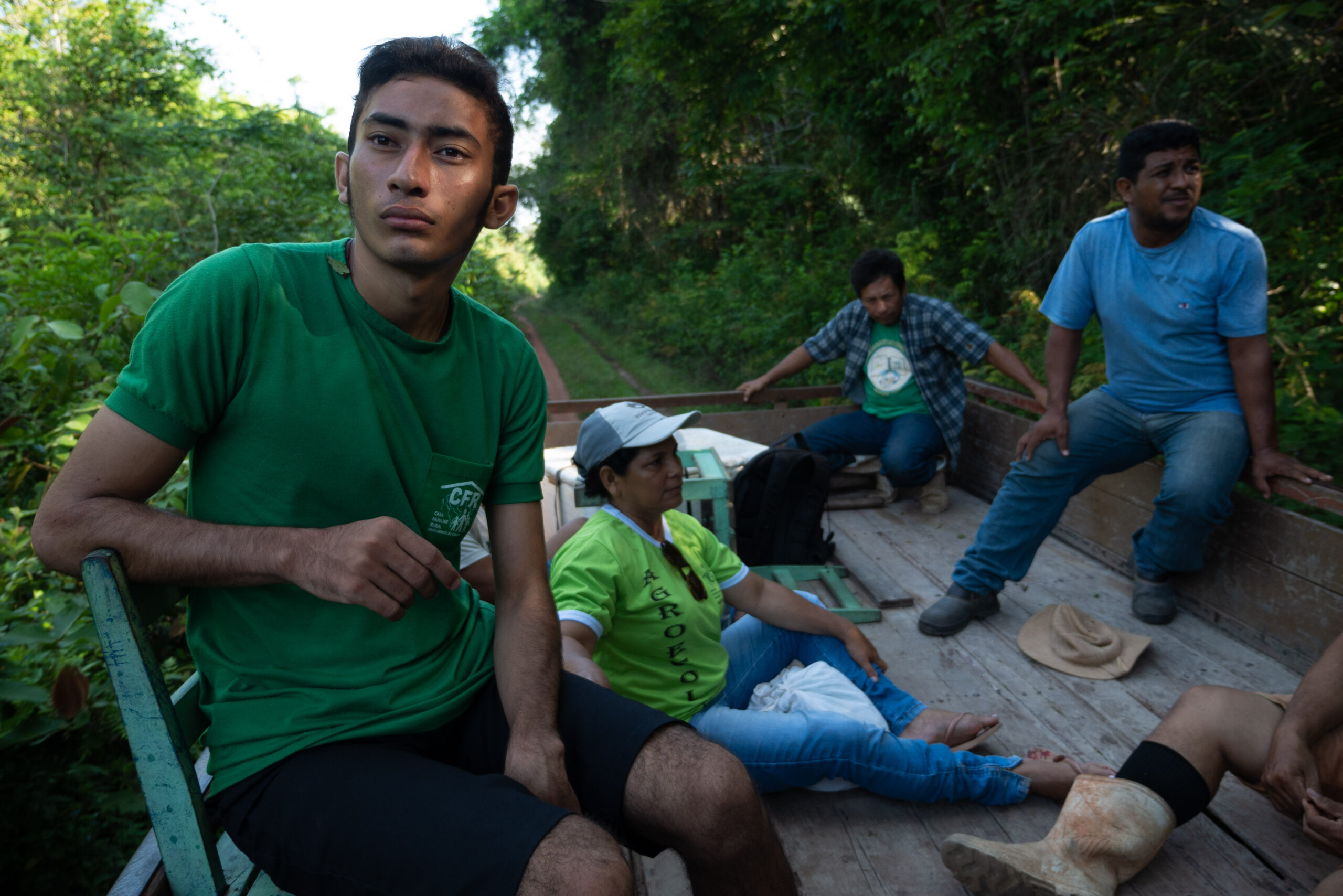
The world’s rainforests—from the Amazon to the Congo Basin to the Leuser Ecosystem—are Earth’s lungs.
Just as human lungs are essential to life, the Earth’s lungs are essential to the collective equilibrium of the planet and the beings that call it home—including humans. They absorb carbon dioxide, uphold essential ecosystems, and underscore the deep and indispensable interconnections of our planetary existence—across regions, species, and communities. Our collective futures depend on the protection of these lush, life-giving landscapes.
The fierce protectors our world’s rainforests need are already in place. The Indigenous Peoples, farmers, and local communities who have lived in these forests for generations have built deep knowledge about their intricacies—how the trees and animals feed each other and how the rivers that run through them feed regional and global equilibrium. These communities witness firsthand the detrimental impacts of deforestation, climate change, and mining on the rainforests and their inhabitants—and they are best positioned to propose the most effective solutions for rainforest protection that ensure just and sustainable futures.
For more than three decades, Global Greengrants Fund has supported these grassroots rainforest stewards with resources and solidarity—both through our grantmaking partnership with Rainforest Action Network (RAN) and across our global advisory network. These movements are already halting extractive development and imagining regenerative, thriving futures for the world’s forests and the entire planet—funding their important conservation work while upholding their rights to land and autonomy is essential.
The stories below represent just a few of the many movements bringing vital protection and repair to the Earth’s lungs—highlighting why investing in them is an investment in our collective survival.
The Power of Data Collection: Protecting the Leuser Ecosystem
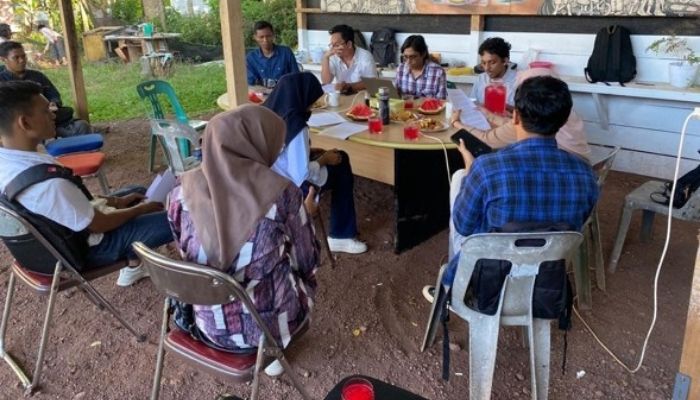
The Leuser Ecosystem is a flourishing rainforest on the north side of Sumatra in Indonesia. It is one of the most ecologically significant landscapes on Earth, home to thousands of flora and fauna species, including critically endangered populations of tiger, rhino, orangutan, and elephant. It also houses the Tripa Peatland, a carbon-rich landscape that, together with the rainforest, is a carbon sink immensely important to curtailing the global climate crisis.
Northern Sumatra is also the ancestral home of many Indigenous Peoples, including the Batak Peoples and the Pante Cermin community. Building on generations of ecological knowledge, these communities have long been essential custodians of the Leuser Ecosystem.
Yet the Leuser Ecosystem has seen a surge in profit-seeking extractive activity over the last century—especially from the palm oil industry. Across Indonesia, rainforests and peatlands have been cleared in large swathes for palm oil plantations, causing immense deforestation while also violating the human rights of Indigenous and local peoples.
The Pante Cermin community has witnessed the impacts of global demand for palm oil. Since 1989, the palm oil company PT. Cemerlang Abadi (CA) has operated a nearby plantation that overlaps with local settlements, farmland, and sacred sites that the Pante Cermin community has never consented to surrender. A 2020 Indonesian Supreme Court ruling ordered CA to hand over more than 2,000 hectares of land to local farmers, yet a year later, CA had done the opposite—they had begun harvesting palm oil on the land and had driven community members away with armed security.
To rally collective and government assistance, local legal aid organization LBH Banda Aceh documented CA’s history of land grabbing, crop destruction without Free, Prior and Informed Consent (FPIC), and use of security forces to intimidate and displace community members. They gathered a team of journalists to conduct a 6-month investigation that included interviews with local farmers, a review of community and public documents, meetings with government officials, and a visit to the contested land—where the journalists documented CA trucks transporting and selling illegally obtained palm oil. From their investigation, they created detailed reports, leveraging their evidence to hold a press conference and broadcast Pante Cermin’s story on the journalists’ website and in regional media.
Since 2014, Global Greengrants has supported movement groups working to remove illegal palm oil plantations across the Leuser Protected Ecosystem. We have also supported efforts to strengthen local stewardship of land and resources—from training communities in sustainable forest management to reconnecting people with the importance of regional biodiversity. Together, these movements are resisting destructive development and protecting the forest’s long-term resilience.
While LBH Banda Aceh and the Pante Cermin community’s battle with CA is ongoing, their work highlights a key piece of the rainforest protection puzzle—documenting the impacts of illegal extractive activities puts pressure on corporations and governments to end harmful development projects. LBH Banda Aceh’s data collection and storytelling have created a strong foundation for community advocacy, rallying collective support for efforts to end deforestation and protect the world’s precious rainforests.
Extractivism-Free Economic Resilience in the Congo Basin
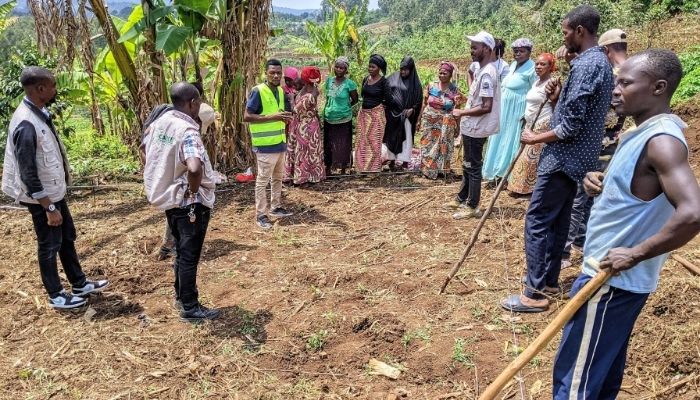
As the northernmost tip of the Congo Basin, the Central African Republic contains dense rainforest that serves as a bastion of biodiversity. Although it accounts for only about 3% of the Congo Basin, it is just as essential for maintaining global carbon equilibrium as the wider rainforest.
While the Central African Republic has long had low deforestation rates compared to many of its Congo Basin neighbors, the country has seen deforestation surge—in 2021 alone, deforestation increased by 71% due to rising agriculture, demand for charcoal and firewood, and logging.
Many local and Indigenous communities, including the Bâ Aka, have lived in the region for thousands of years, sustainably hunting, gathering, and fishing—yet high poverty rates have forced many to consider participating in extractive industries like logging for survival. Recognizing the local need for an economic boost that offsets rather than intensifies deforestation, Alternatives Durables (ALDU) worked with local Gbeti Fondo village farmers to seed participatory agroforestry and beekeeping systems. ALDU hosted training workshops on climate change and collaborative resource management, accompanied community members to set up test plots integrating agroforestry with beekeeping, and helped establish community nurseries and beehives. Participants learned valuable skills for managing native trees such as teak, ayous, and essessang, and for constructing and stewarding hives. This has created the capacity for villagers to imagine alternatives outside extractive systems.
For more than 20 years, Global Greengrants has supported ALDU and numerous other movement groups in the Central African Republic working to strengthen community stewardship of forest resources. From building knowledge of land and resource rights to addressing poaching and deforestation, these groups are cultivating regenerative systems and cultures that work with the forest rather than against it. Together, their efforts form part of a larger, interconnected movement to safeguard this critical region of the Congo Basin, its extraordinary biodiversity, and its cultural heritage.
ALDU’s work is a powerful model for systems that balance community economic autonomy with sustainable forest guardianship—outside of production-centered economic models. When efforts of this nature can be replicated in contextually relevant, people-powered ways around the world, they enable a collective shift away from extractivist systems that demolish forests for profit and towards cultures of care for both communities and ecosystems. Each of these projects is a small step towards just and sustainable futures.
Indigenous Power as Forest Power in the Amazon
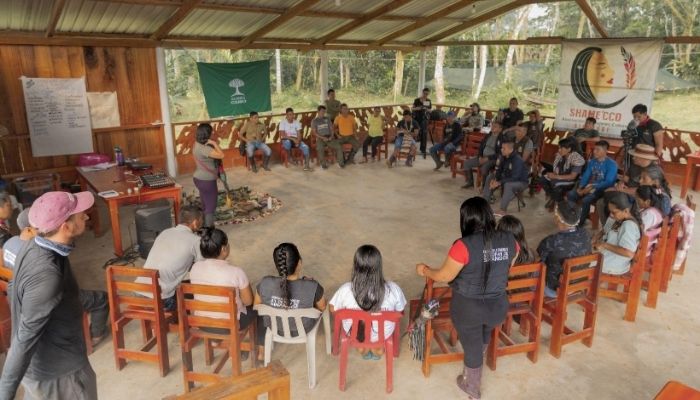
The Amazon Rainforest covers hundreds of millions of hectares of land, including seemingly endless lush forest, abundant biodiversity from rubber trees to blue macaws, and the boundless waters of the Amazon River. As the world’s largest rainforest, every hectare of Amazon forest is precious for our collective survival. Yet for decades, extractivist activity has slowly encroached on these necessary ecosystems, destroying more than 15% of the rainforest—which not only threatens local communities and ecosystems but also poses an existential threat to all life on Earth.
In the Ecuadorian and Peruvian sections of the Amazon, Indigenous Peoples like the Siekopai, Waorani, and Kofan have tended the land for thousands of years, building generations of ecological culture and knowledge centered on harmonious relationship with the land and its non-human inhabitants. With their traditional knowledge and deep intergenerational connection to the rainforest, their leadership is fundamental to protecting the Amazon Rainforest.
Since 2016, Global Greengrants has supported Fundación Ceibo Alliance in bolstering the autonomy and advocacy of Indigenous Peoples throughout the Ecuadorian and Peruvian Amazon while weaving crucial connections among regional Indigenous communities. In 2024 alone, our support helped them to sow seeds of Indigenous power across the region—including legal support for a key Siekopai effort to reclaim 120,000 hectares of ancestral territory, territory mapping to strengthen Siekopai advocacy in Wajoya territory, biodiversity baseline research in Siekopai and Kofán territories, and the launch of a Regional Land Defense School connecting Indigenous land patrol networks across six of the region’s Indigenous nations. The Regional Land Defense School not only elevated land patrols from technical monitors to established Indigenous Guards responsible for protecting their territories and communities but also increased the area under collective protection from 710,000 hectares to nearly 1 million hectares of primary rainforest.
But Fundación Ceibo Alliance’s work doesn’t stop at defending and reclaiming Indigenous land—they are also cultivating a shift away from extractive cultures that drain resources and create cycles of poverty and back to traditional cultures where communities have economic autonomy and sustainable stewardship of the land. In 2024, for example, they ran the fourth cycle of the Women’s Leadership and Entrepreneurship School, which brought legal, accounting, and psychosocial support to women-led economic efforts across the region—from clothing sales to fish farming—strengthening women’s economic power while emphasizing sustainability. They also hosted an Indigenous Communications School for Indigenous youth, teaching multimedia storytelling skills that build youth power to highlight their experiences and the resilience of their communities in protecting the Amazon.
Fundación Ceibo Alliance’s decentralized yet interconnected efforts in the Ecuadorian Amazon are protecting millions of hectares of land vital to life on Earth, while strengthening the Indigenous cultures that have long safeguarded these territories. For thousands of years, the forest thrived under their careful guardianship—and by collectively supporting them, we can ensure the rainforest’s continued flourishing.
Essential Funding for Forest Protectors
As these stories demonstrate, communities across the Leuser Ecosystem, Congo Basin, and Amazon are not waiting for solutions to arrive from elsewhere. Indigenous Peoples, women and gender-diverse people, peasants, people with disabilities, and other frontline leaders are already advancing proven strategies to protect forests, defend biodiversity, and sustain the ecosystems upon which we all depend.
If the world’s rainforests are indispensable to a livable future, then supporting the people who have safeguarded them for generations must be a philanthropic priority. This requires moving resources to those closest to the challenges—and the solutions—not prescribing answers from afar.
For funders, the opportunity is clear: trust community leadership, invest in long-term movement-building, and provide flexible support that enables forest defenders to protect their lands, cultures, and futures. When Indigenous and frontline communities have the power and resources to lead, forests thrive. And when forests thrive, so do the planetary systems that sustain life for us all.