
By Laura García, President & CEO, Global Greengrants Fund
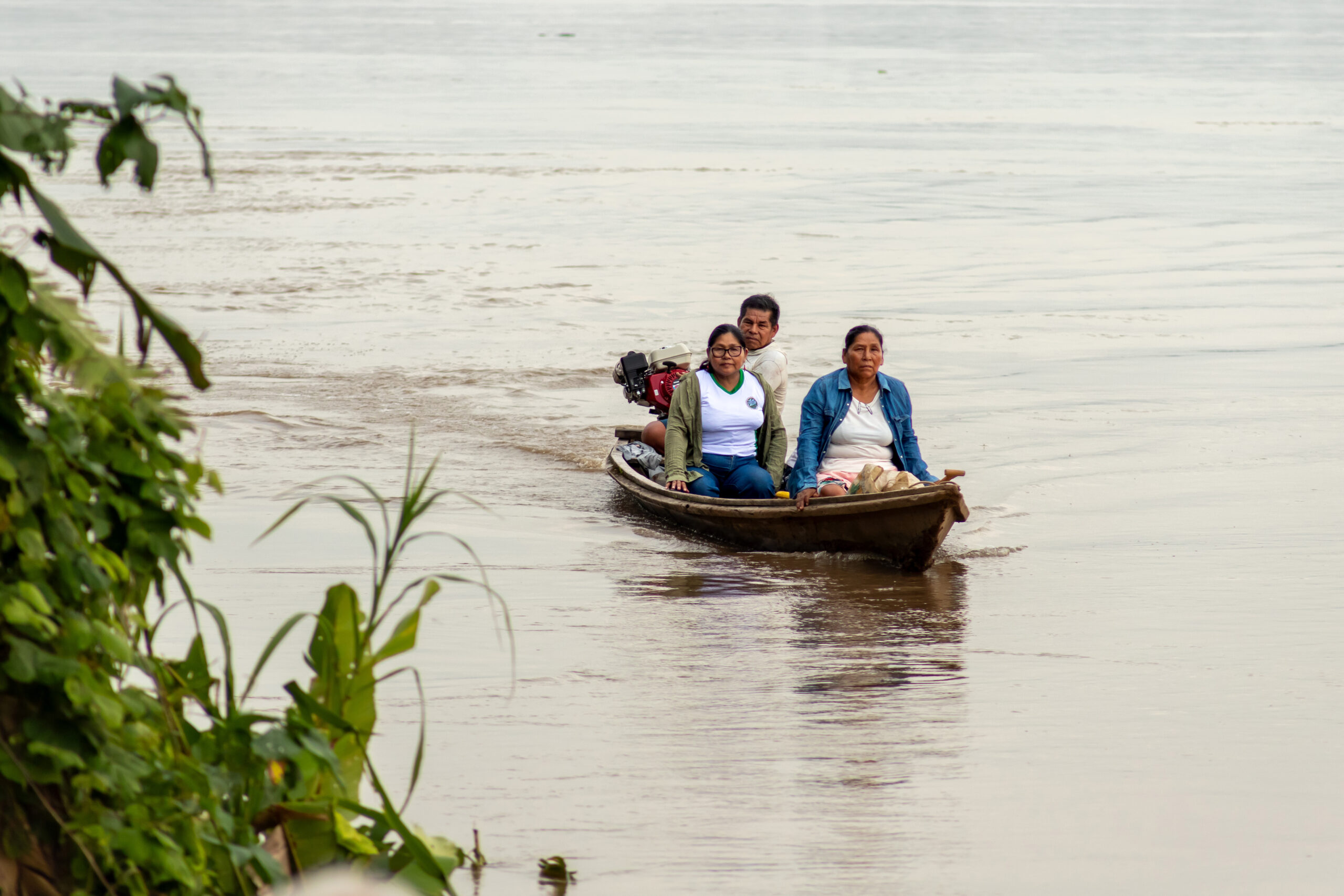
Philanthropy often behaves as though change begins where it becomes visible. Living systems tell a different story. A river does not begin at its mouth. It is sustained by countless tributaries—some visible, others hidden—whose relationships give the whole its strength. Watersheds remind us that resilience is rarely built in one place. It emerges from connections that accumulate over time.
Around the world, grassroots movements are the headwaters of change. For centuries, they have stewarded the civic, cultural, ecological, and economic relationships that make resilient societies possible—protecting forests and rivers, strengthening Indigenous governance, defending human rights, democratic participation, and LGBTQ+ rights, and building just local economies. They continue to nurture our infrastructure for social change even as democratic norms erode, extractive industries expand, and the climate crisis accelerates. These movements are not peripheral to democracy or social progress; they are among the forces that sustain and renew both.
John Fullerton’s recent essay, responding to Nan Ransohoff’s reflections on the future of philanthropy, argues that we risk entering a third wave of “ignorant philanthropy”—one in which unprecedented wealth continues to operate through familiar assumptions about expertise, innovation, and scale. As one of the greatest intergenerational transfers of wealth in history unfolds, as hundreds of billions of dollars in new AI capital become liquid, philanthropy has an extraordinary opportunity to rethink not simply how it gives, but how it understands change itself.
The central question on my mind is not only how wealth will be accessible to grassroots movements, but whether philanthropy can learn to understand how ecological and social systems sustain change. For much of its history, philanthropy has approached social and environmental challenges as problems to solve. It has identified discrete interventions and focused on measured outcomes and scaled successful models. While those practices have generated some progress, they are isolated interventions. In contrast, social movements exist as a part of a web of reciprocal relationships that evolve over generations. Remove one thread, and the whole system shifts. Strengthen one relationship, and resilience ripples outward in ways that no single metric can fully predict.
For more than thirty years, Global Greengrants has worked alongside grassroots movements restoring the civic, cultural, and ecological relationships that make resilient societies possible. Our role is not to design solutions from afar, but to support movements whose knowledge has been cultivated through generations of stewardship, collective action, and deep connection to place.
This perspective sits at the heart of Global Greengrants’ decentralized grantmaking ecosystem. Supported by more than 250 advisors across advisory boards, partner funds, and regional networks, decisions are informed by people who live within the communities they serve—Indigenous leaders, environmental defenders, scientists, organizers, and movement builders whose accountability flows first to place and to people, not to institutions, making their solutions more impactful. Over time, we have come to understand this network as something closer to a global watershed of knowledge and action. Ideas developed by Indigenous women defending forests in Ecuador strengthen conversations about territorial governance in Indonesia. Community-led energy initiatives in Central Asia offer lessons for equitable climate transitions elsewhere. Legal strategies developed in one country become tools for democracy in another. Knowledge transcends borders, circulates, adapts, and deepens through communities united by shared purpose.
The role of philanthropy, then, is to recognize, nourish, and remain accountable to the systems communities have cultivated over generations.
The Kichwa women of Yuturi Warmi, in Ecuador, offer one example of what these systems look like in practice. Faced with the expansion of illegal mining into their Amazon territory, they formed an Indigenous guard to protect the forests surrounding the Napo River. Describing their work as environmental protection alone misses what is truly at stake. They are protecting water, certainly. But they are also protecting language, medicine, memory, ceremony, food systems, women’s political participation, and the ability of future generations to inherit both a living forest and the cultural knowledge that allows them to belong within it. Alongside territorial defense, they are building agroecological livelihoods that reduce dependence on extractive industries and create the conditions for lasting change.
In West Kalimantan, Indonesia, within what is known as the “land of a thousand rivers,” a landscape of dense rainforest, vast peatlands, and hundreds of winding waterways lies Sekucing Kualan village, where the Kualan Dayak Indigenous community has stewarded the land for generations. Drawing on ancestral knowledge refined over centuries, families cultivate rain-fed rice fields, manage rubber groves, and harvest forest resources in ways that sustain both livelihoods and the surrounding forests. They continue today to defend their customary forests against industrial logging and plantation expansion. In doing so, they are also strengthening Indigenous governance, preserving cultural knowledge, and sustaining the reciprocal relationship between people and forest. Here, territorial governance is climate resilience—and the living foundation of civil society, collective self-determination, and democratic life.
Investing in Living Infrastructure
If we begin with the recognition that resilience emerges through interconnected relationships, philanthropy itself begins to look different. In South Africa, communities living alongside coal extraction spent decades documenting pollution, organizing locally, pursuing legal action, and demanding accountability. Their movement halted new coal-fired power development and helped create one of the world’s first Just Energy Transition Plans—a vision extending beyond energy to include education, healthcare, water, housing, and democratic participation. This victory demonstrates the power of sustained, well-resourced climate justice movements. Decades of organizing—often beginning with small, community-led actions—can build into coordinated regional pressure capable of shifting national policy. The impact extends far beyond South Africa: it marks an important step toward addressing global energy inequities and advancing democratic, community-led solutions to the climate crisis.
We see the same pattern elsewhere: youth-led Nasa community movements in Colombia are drawing on ancestral knowledge to protect their culture and biodiversity, while across Kenya, the Philippines, and Indonesia, persons with disabilities are emerging as influential climate leaders advancing long-term solutions grounded in lived experience. Around the world, movements rooted in trust, collaboration, and local leadership are reclaiming land, strengthening communities, and reshaping the systems that govern their futures.
The most important part of social movements is often the most invisible: trust accumulated over decades, reciprocal relationships, local leadership, cultural continuity, and institutions rooted in community rather than imposed from outside. In many ways, social movements do not depend on philanthropy to exist; they exist because the survival of communities and ecosystems depends on them. Philanthropy’s opportunity is to strengthen what is already in motion.
The Future Is Already Taking Root
Nan Ransohoff raised the question about whether existing institutions have the capacity to absorb an unprecedented influx of philanthropic wealth. Fullerton suggested that philanthropy’s challenge is not a lack of organizations capable of absorbing capital, but an ontological blindness to the living systems that already generate the social and ecological conditions it seeks to create. The question is not whether this infrastructure exists, but whether philanthropy is willing to recognize, trust, and resource it.
The next era of philanthropy will be defined not by its ability to engineer solutions, but by its willingness to recognize that the most important infrastructure for change already exists. Across the world, communities are sustaining the civic, cultural, ecological, and democratic relationships on which resilient societies depend. The future is already taking root. Philanthropy’s role is not to direct it, but to help it flourish.