
What living systems can teach philanthropy about power, trust, and change.
Across philanthropy and international development, “systems change” has become a familiar ambition. But what if some of the ways we think about changing systems are still rooted in the very logic we need to leave behind?
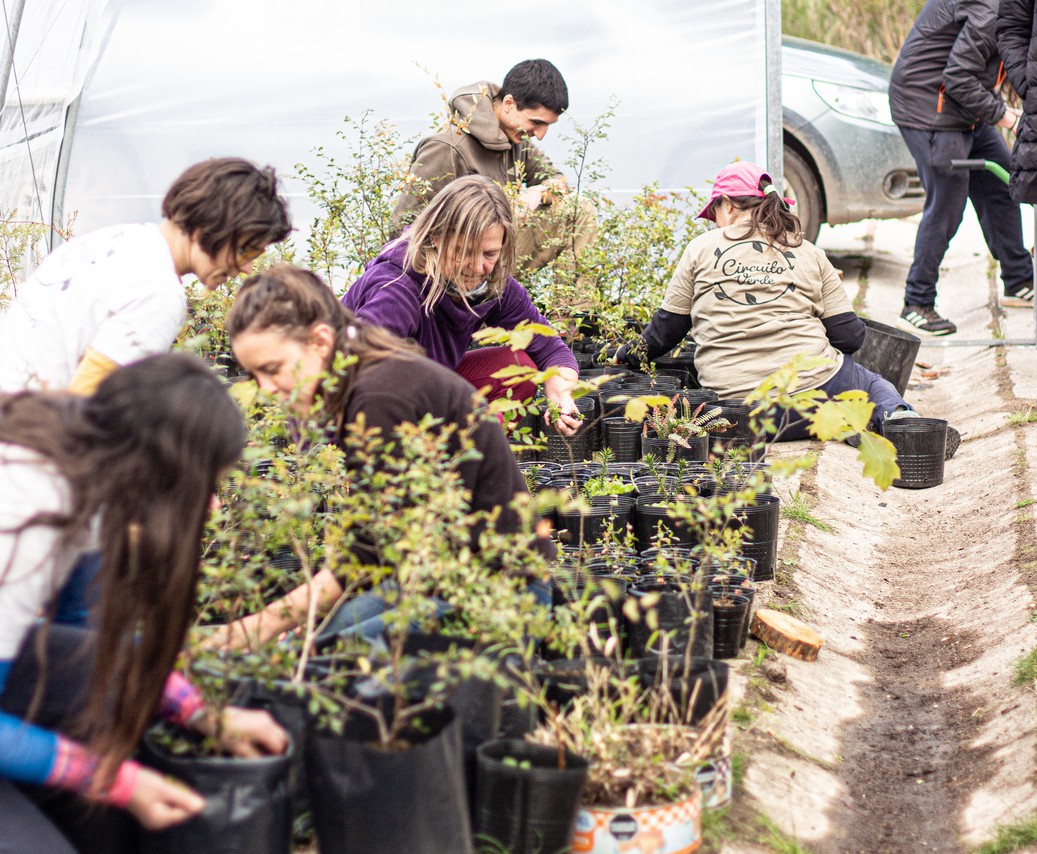
In a recent conversation, How Does Your Garden Grow?, hosted by Alliance Magazine, Barry Knight invited participants to move away from what he called a “machine mind”—the idea that complex social and ecological systems can be managed by pulling the right levers to produce predictable outcomes. Systems, he argued, are better understood as ecologies: living, dynamic, and emergent. “Garden mind” instead offers a different way of seeing change, one that recognizes that, like a garden, systems are alive, interconnected, and capable of growing in directions we cannot fully predict or control.
The conversation, moderated by Knight and featuring Jenny Hodgson of the Global Fund for Community Foundations and B de Gersigny of Global Greengrants Fund, explored what that shift might mean for philanthropy and international development. For Global Greengrants, this suggested framing of ‘garden mind’ closely reflects what we have learned through decades of supporting grassroots environmental justice movements around the world. Communities are not empty spaces waiting for solutions, resources, or expertise to arrive. They already have knowledge, relationships, organizing, political power, and deeply rooted connections to land and territory.
Jenny described this as the “relational infrastructure” that often matters most—the connections, trust, and collective capacity that allow communities to act together. She offered a question that sits at the heart of the conversation: “How do we understand that our biggest asset as humans is our connection with each other?” B echoed this from the perspective of Global Greengrants, noting that some of the most resilient infrastructure within social movements has not been built through money at all, but through relationship, necessity, shared vision, and connection with the Earth.
These understandings change the role philanthropy can play.
Global Greengrants’ decentralized model is built around hundreds of locally rooted advisors who help guide funding decisions close to the movements and communities doing the work. Rather than assuming that power must be “given” to communities, the conversation invited philanthropy to recognize the power and agency that already exist—and to ask how resources can strengthen, rather than constrain, them.
Jenny’s framing of Possible Now builds on this idea. “We have much more than we think we have if we start to see the world differently,” she said—particularly when we begin to recognize the people, relationships, and alternatives already taking shape at the edges of dominant systems.
Grassroots organizing rarely unfolds according to a predetermined theory of change. In the conversation, B shared an example of Global Greengrants’ long-term support for communities and movements resisting coal, fracking, and fossil fuel extraction in South Africa. Over time, that organizing contributed not only to struggles for energy sovereignty, but also to broader movements around health, housing, land, democratic participation, and a just energy transition. Those outcomes could not have been designed decades in advance. They emerged from sustained relationships, local organizing and the priorities of communities themselves.
This is where the idea of “garden mind” becomes more than a metaphor. For philanthropy, it asks us to become more comfortable with emergence: to support the conditions in which movements can grow without assuming we can determine exactly what that growth will look like. It means being clear about the values and transformation we hope to advance while leaving room for communities to determine the paths, strategies, and connections that make sense in their own contexts.
It also asks something of institutions themselves: greater tolerance for uncertainty, a willingness to loosen control, and recognition that funders are participants within living systems rather than managers standing outside them. Perhaps most importantly, it asks us to listen. As B offered in closing, the work ahead may require creating more space to sit with discomfort rather than rushing back toward familiar structures—and approaching one another, and the movements we seek to support, with what the conversation beautifully described as relational humility.
In a moment of profound ecological and political uncertainty, systems change calls for a different kind of attention: to the relationships, movements, and possibilities already taking root.
Watch the recording of the conversation here.