
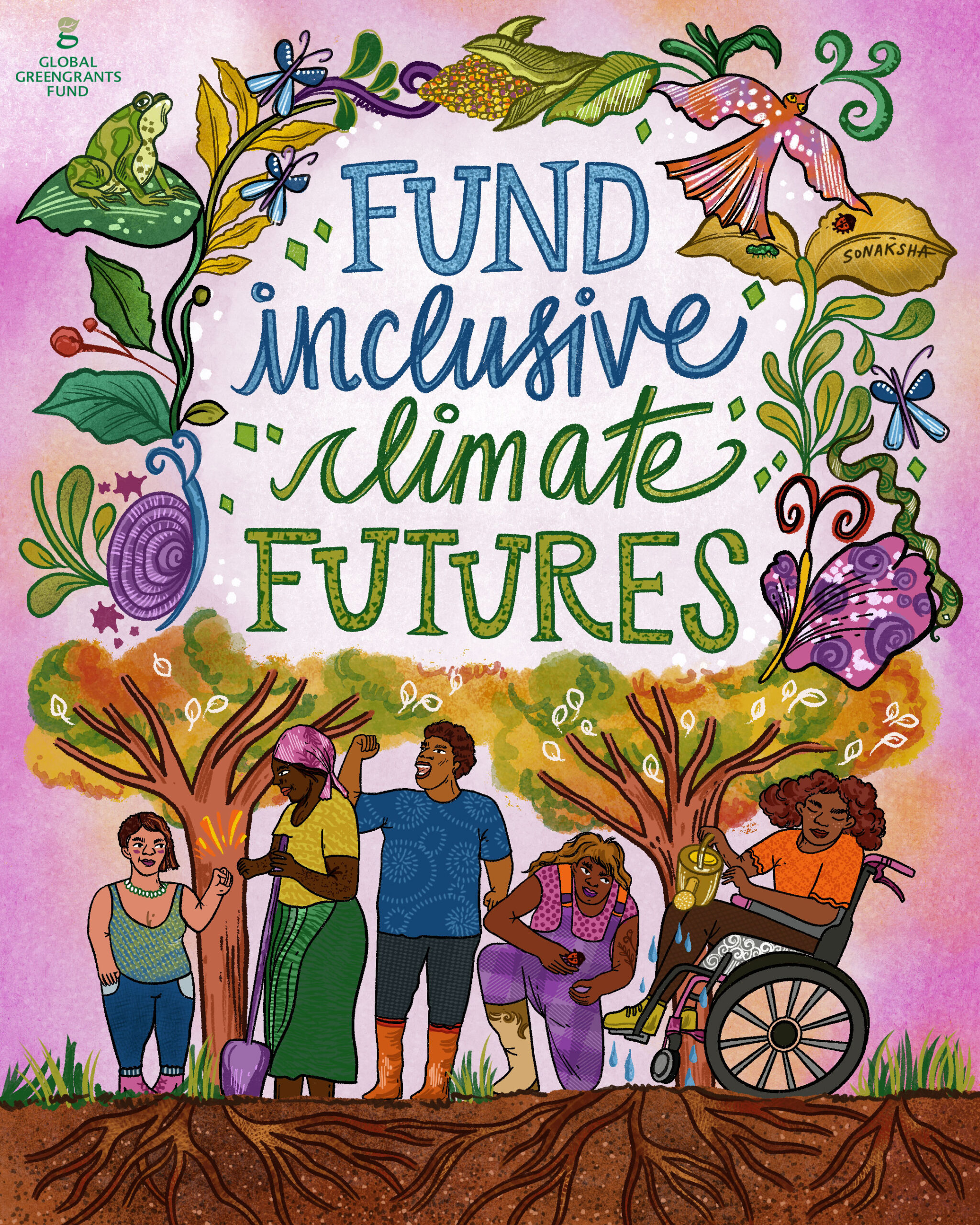
“Persons with disabilities are emerging as influential leaders advocating for climate justice and advancing sustainable solutions grounded in knowledge and lived experience.”
— Dwi Ariyani, Disability Rights and Climate Justice Board Advisor, Associate Director for Peer and Collective Learning for the Disability Rights Fund and the Disability Rights Advocacy Fund
This International Day of Persons with Disabilities, we spoke with advisors from the Global Greengrants Fund Disability Rights and Climate Justice (DRCJ) Advisory Board about the strategic advantage of funding at the intersection of disability and climate. Since the board’s founding in 2022, the DRCJ board has made nearly a hundred grants globally totaling over $1 million, giving the DRCJ advisors a unique opportunity to witness the power of inclusive, disability-led climate solutions.
The DRCJ Board advisors are committed to a shared vision: Strong climate movements are those that reflect the full breadth of our communities. Philanthropy must invest accordingly, ensuring people with disabilities are central to the work. People with disabilities—as well as women, youth, Indigenous Peoples, and more minoritized communities—hold essential solutions to climate crises based in firsthand experience of discrimination and crisis. Solutions are not truly equitable without their perspectives and leadership.
In their responses below, the DRCJ advisors share powerful wisdom about cultivating connections between disability and climate movements, supporting people with disabilities as agents of climate action, and providing fertile soil for disability-led movements to grow deep, regenerative roots and build vibrant, just futures.
Why is it strategic for funders to support disability-inclusive and -led climate action? How is it interconnected with other efforts to make climate action more equitable?
People with disabilities often feel most acutely the impacts of climate change and environmental crises. We face multiple intersecting forms of discrimination and exclusion from climate-related decision-making spaces.
Yet for climate action to be truly impactful, it needs the power and energy of the world’s 1 billion persons with disabilities. Persons with disabilities are rights holders and agents who are already on the frontlines of the climate crisis, particularly women and youth with disabilities. We are emerging as influential leaders advocating for climate justice and advancing long-term solutions grounded in knowledge and lived experience. Disability-inclusive and -led action brings innovations that many funders have not considered.
If funders want equitable futures, resources need to flow toward the needs and perspectives of persons with disabilities. This will ensure effective, sustainable movements for the long-term.
What does disability-led climate action look like? How are grantee partners leading climate solutions in their communities?
Below, we share three inspiring examples of disability-led climate action:
Fostering Intersectional Disability-Inclusive Action
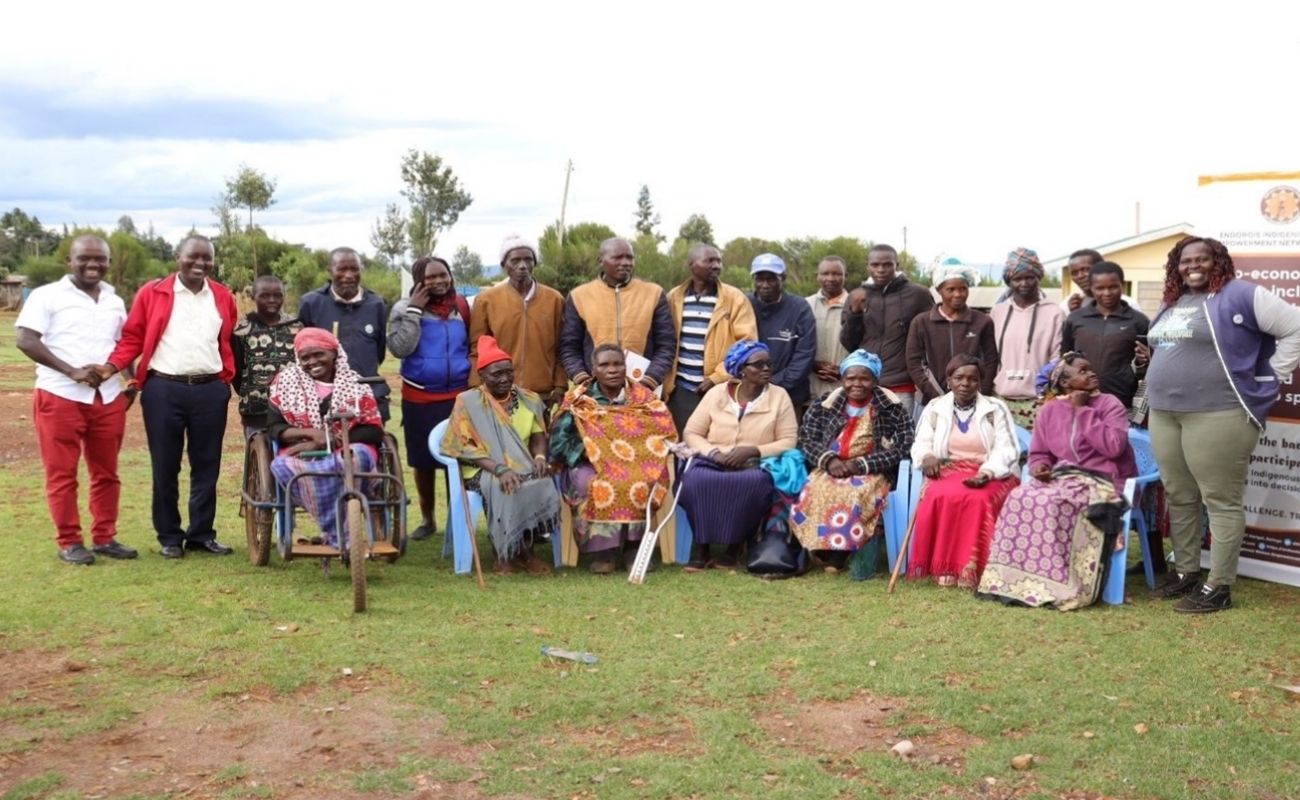
In the Great Rift Valley of Kenya, near Lake Bogoria, grantee partner Endorois Indigenous Women Empowerment Network (EIWEN) is building the climate advocacy power of Endorois persons with disabilities.
The Endorois people have lived pastoralist lives in the Great Rift Valley for generations, tending livestock and caring for the region’s forests and lakes. As the global climate has shifted, the community has faced prolonged droughts and dangerous floods, which have caused property destruction, damaged sources of income, and displaced many community members, particularly persons with disabilities, from their ancestral homes. While Endorois persons with disabilities face disproportionate impacts, they have insufficient access to climate change information, limiting their advocacy efforts.
To alleviate this, EIWEN has led workshops, trainings, and community outreach that educate Endorois persons with disabilities about the climate change impacts they are experiencing, as well as their right to inclusion in their local government’s adaptation and disaster response strategies. The workshops built agency among Endorois persons with disabilities to advocate for a place at the decision-making table, and it is already bringing results—in 2024, local government officials agreed to review climate policies for inclusion and representation of persons with disabilities.
EIWEN’s work highlights why it’s important to invest in education and capacity-building—because people with disabilities aren’t just passive recipients of financial support, but agents in building a more just world that preserves rather than destroys connection with the land.
Bridging the Disability and Climate Knowledge Gap
Advocacy at the intersection of disability rights and climate justice faces a major barrier: the information gap between disability and climate research.
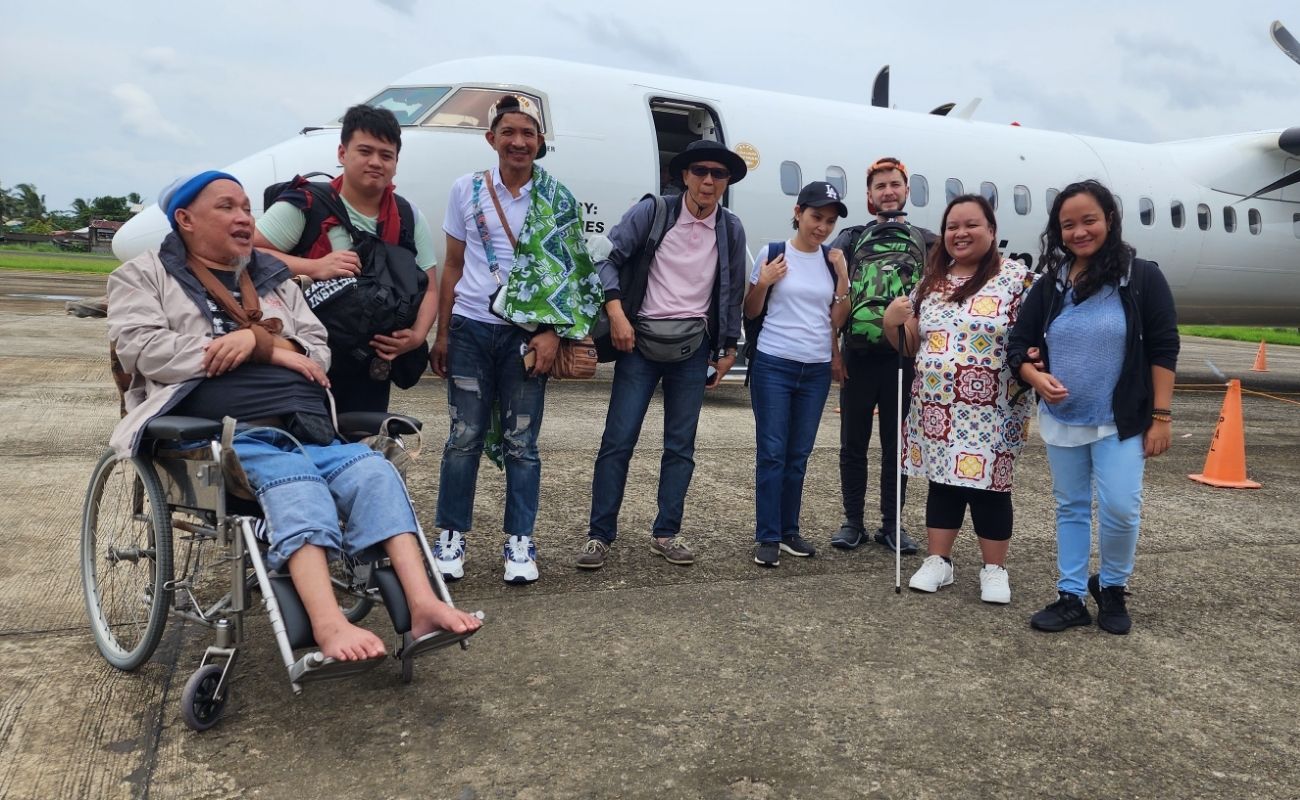
To bridge this gap and give disability-inclusive climate advocacy a powerful boost, one grantee from the Philippines, Life Haven Center for Independent Living, produced a critical research paper highlighting the disproportionate climate impacts faced by people with disabilities. The paper focused on Laoang municipality in Northern Sama, a coastal region where agriculture and fishing are vital to feeding the community and providing income. Recently, the Laoang municipality’s long intertwined history with agriculture and fishing has come under threat from sea-level rise, changing weather patterns, and ocean warming. Crops have struggled and fish populations have dwindled, leading to soaring food prices that exacerbate food insecurity for local people with disabilities, who already face high levels of unemployment.
Life Haven’s research provided crucial evidence of the links between climate change and the intensified insecurity, economic challenges, and exclusion that persons with disabilities face in the Laoang municipality. It also stressed the urgent need for more—and more accessible—information about the intersection between disability and the climate crisis to ensure climate policies and mitigation efforts not only consider persons with disabilities, but integrate them into decision-making.
But Life Haven hasn’t stopped in the Philippines. Seeing the value of the report as a case study for global change, Life Haven has presented their research at international conferences such as COP28 in Dubai and the 2025 Global Disability Forum in Berlin. By connecting to key international climate and disability spaces, Life Haven has built international support for disability-led climate action. Investing in this kind of knowledge production is essential for building stronger, more effective support for the inclusion of persons with disabilities in climate justice work.
Building Food Sovereignty Among Women with Disabilities
In the Sleman Regency of Indonesia, a volcanic region on the island of Java, grantee partner Center for Improving Qualified Activity in Live of People with Disabilities (CIQAL) fosters food sovereignty among people with disabilities, deepening their connections to local food systems and building their climate advocacy power.
The Sleman Regency, a region with fertile soil from Mount Merapi’s ashfall, is feeling the far-reaching effects of climate change. The rising frequency of storms and floods has heightened crop failure, creating scarcity and increasing food prices. This has intensified food insecurity for persons with disabilities, and especially women with disabilities, who are already at increased risk for poverty.
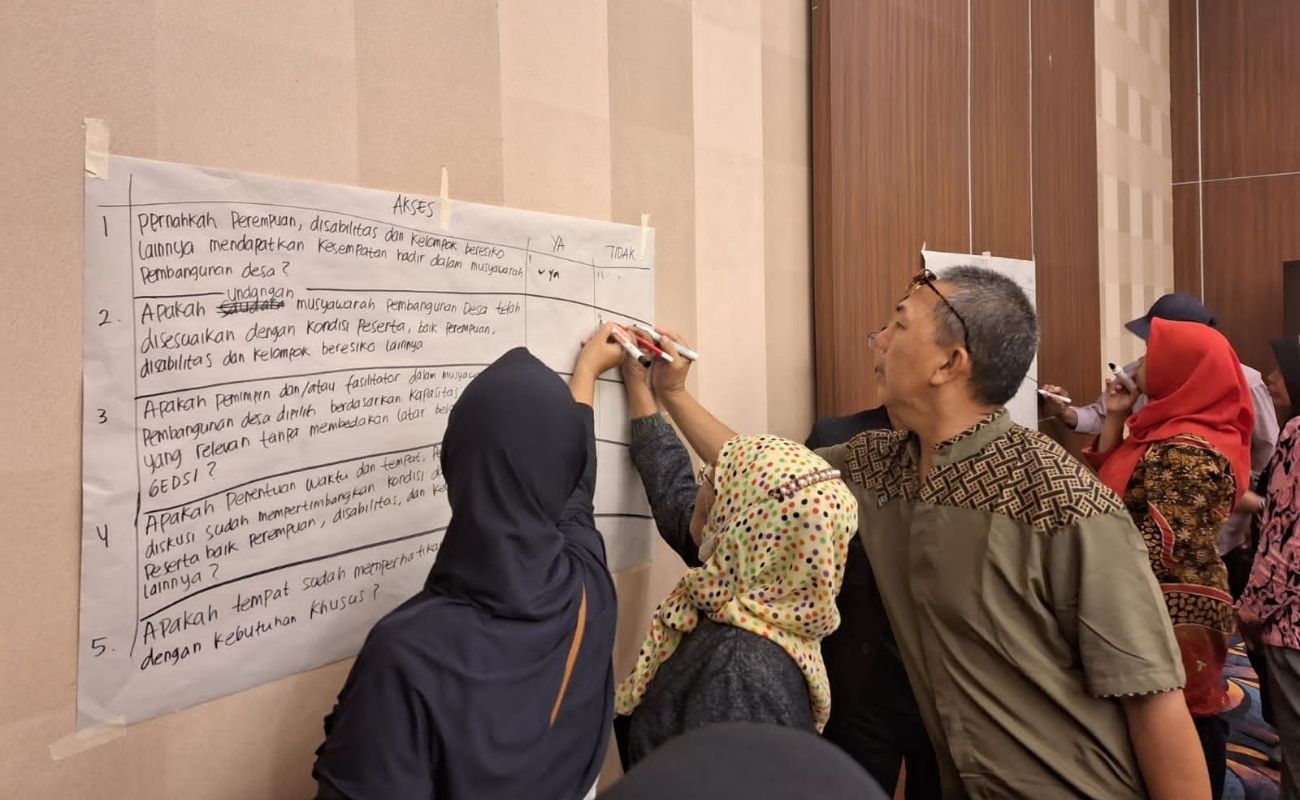
To ease the growing burden of food insecurity, CIQAL has hosted workshops centered on women with disabilities that bring people together to imagine futures beyond unsustainable extractive food systems. Workshop participants have learned about the connection between food insecurity and climate change and gained skills for growing gardens with nutritious native plants like taro. The result: Persons with disabilities are building their own food systems and advocating for locally grown foods in their communities, building community resilience in the face of the planet’s increasingly unpredictable climate.
The DRCJ Board is proud to fund grantees like CIQAL, who not only improve the quality of life for persons with disabilities but also support them to become active builders of sustainable systems.
How has Global Greengrants Fund’s support at the intersection of disability rights and climate justice made a difference for disability and/or climate movements?
Global Greengrants is a leader in funding intersectional movements, from Indigenous Peoples to youth, specifically in the Global South. By establishing the DRCJ Board, Global Greengrants has further demonstrated its commitment to intersectional movement-building – it is one of the few funders intentionally grantmaking at the intersection of disability rights and climate justice. Grants are unrestricted, so organizations of persons with disabilities can design and decide for themselves what to work on, and how to address challenges in their communities. This has shifted power and validated the expertise of persons with disabilities to provide solutions on the ground.
We have seen over the past 4 years how this flexible, intersectional approach has enabled grassroots disability rights organizations to become powerful knowledge producers and agents of change in the climate movement, rather than just vulnerable victims, thereby strengthening both the disability rights and climate justice movements.
The DRCJ board is also made up of persons with disabilities, which facilitates a deeper connection with the work the board supports. This provides an important model for enacting the popular disability justice slogan, “Nothing about us without us.”
Take Action:
Climate funders can—and must—shift more resources toward disability inclusion. We must share resources that are flexible, use grantmaking processes that incorporate accessibility tools like alt-text and captions, and put decision-making in the hands of people with lived experience.
People with disabilities are already weaving connections between movements and advancing climate solutions that include everyone. We just need to stand with them. Like fertile soil nourishing the growth and proliferation of entire ecosystems, we must nourish equitable movements to grow into ecosystems of courage, creativity, and care equipped to tackle the root causes of today’s crises, from capitalism to patriarchy to ableism.
Together, we can foster connections between movements and create vibrant futures where no one is left behind.
Responses in this Q+A have been edited into collective answers. Thank you to the DRCJ Board’s advisors–Dwi Ariyani (Disability Rights Fund), Mary Keogh (CBM Global), Fred Ouko (ADD International), and Tuomas Tuure (Abilis Foundation)–for their powerful contributions.
–
* While “persons with disabilities” is the official language agreed on by the Convention on the Rights of Persons with Disabilities, we recognize that there are differences in language that disability movements and communities use depending on region and the social and political context of particular communities. To acknowledge this variation, we have chosen to use both “persons with disabilities” and “people with disabilities” in this blog post.