
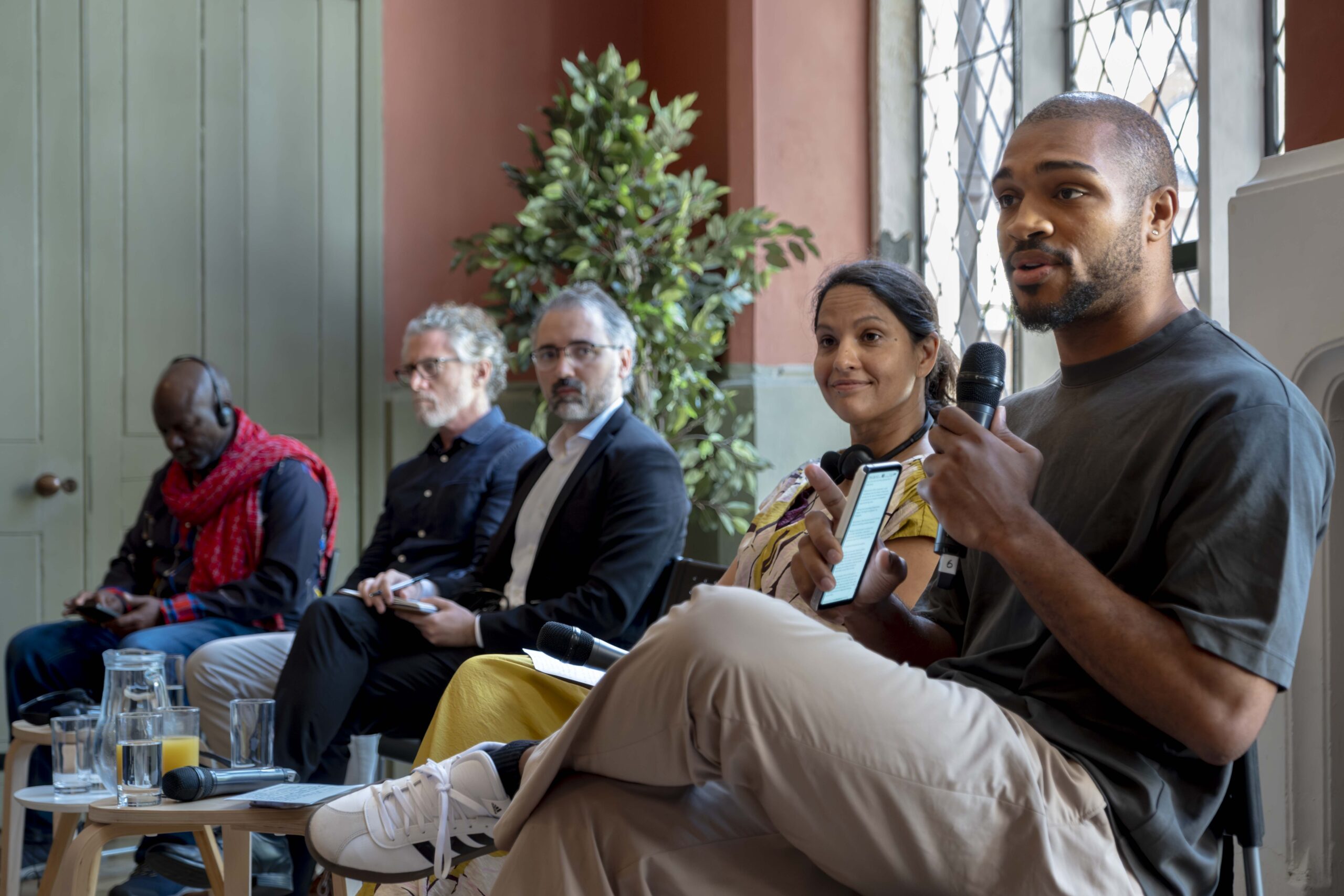
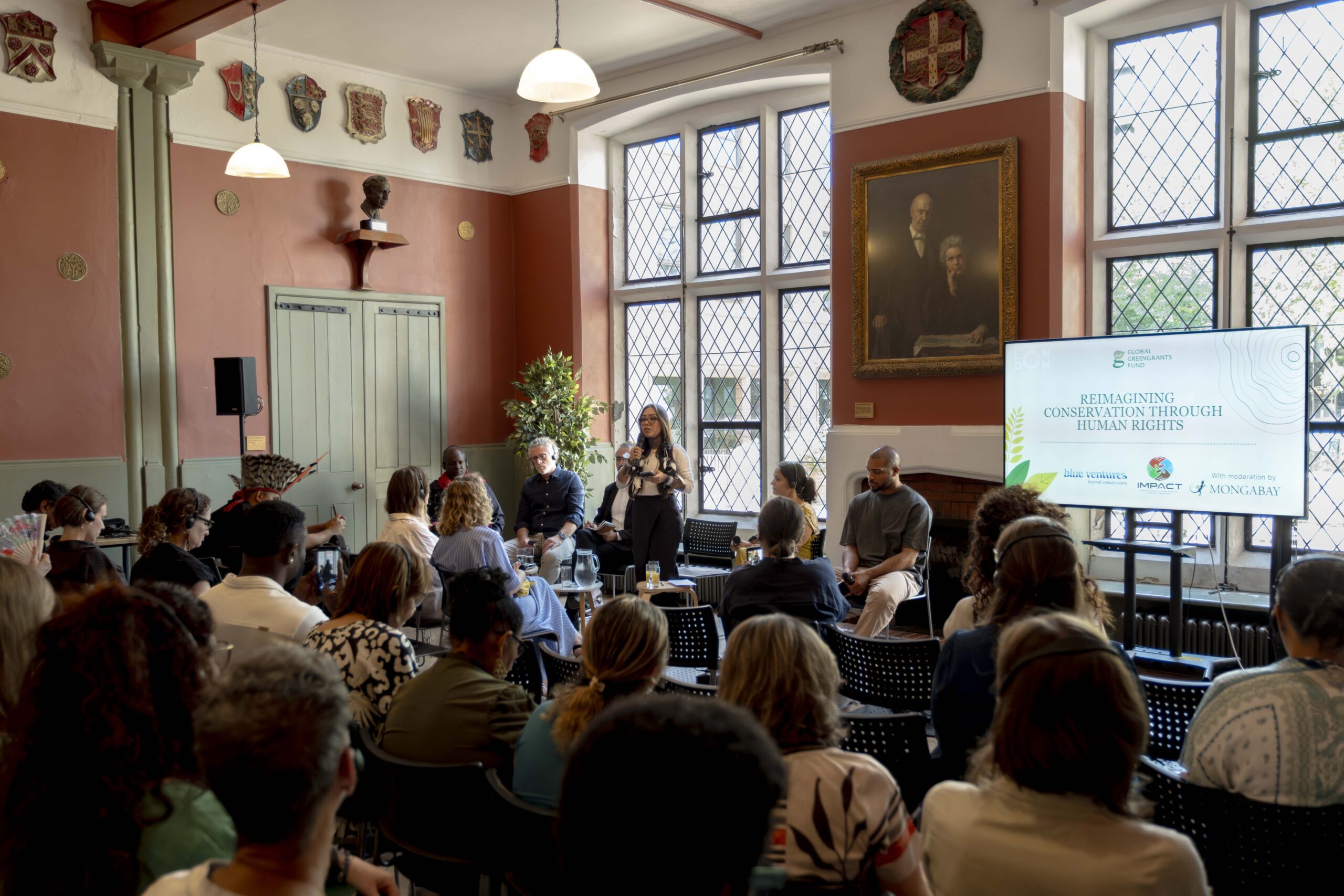
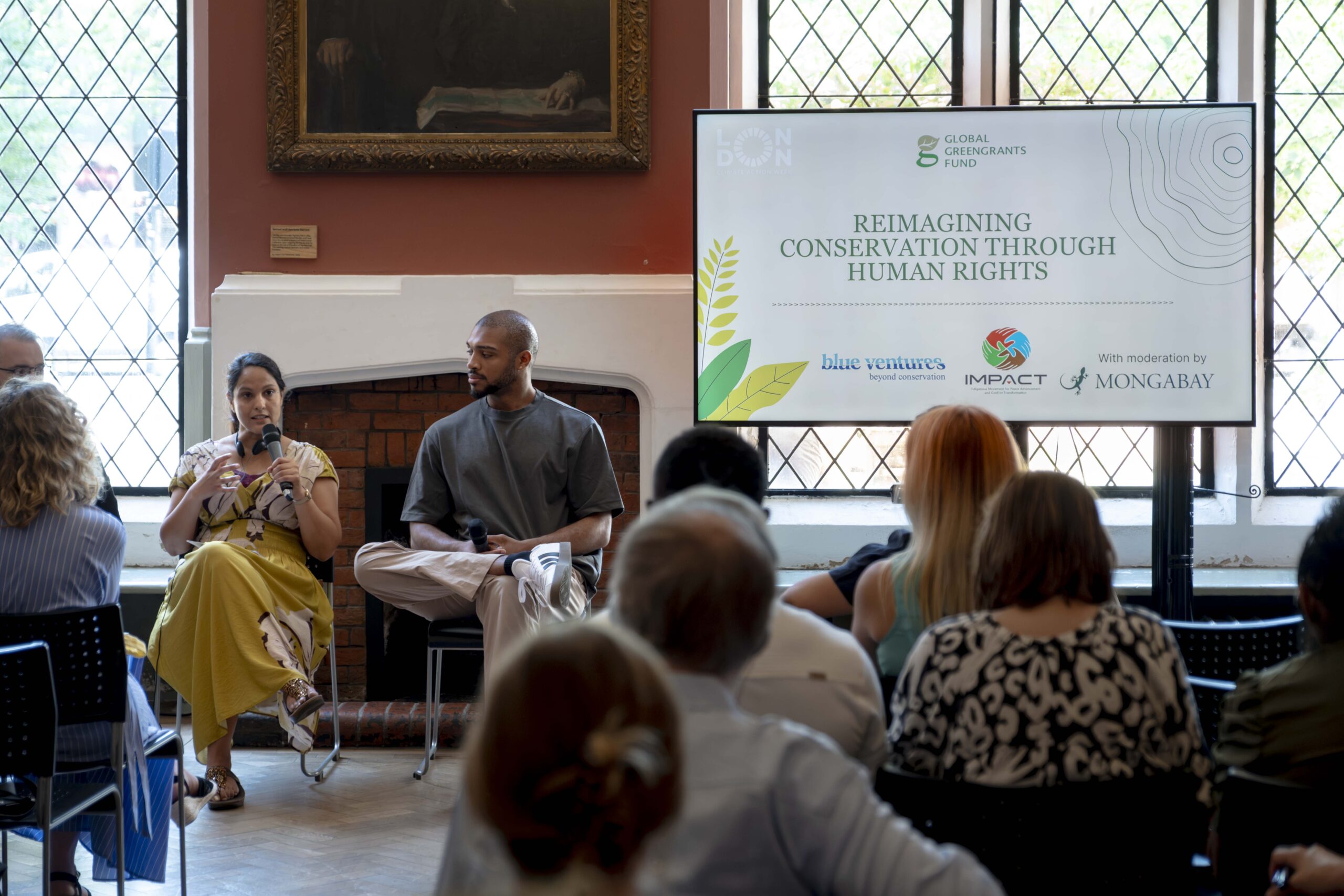
During London Climate Action Week, Global Greengrants Fund, Mongabay, and Blue Ventures brought together conservation practitioners, Indigenous leaders, funders, policymakers, and journalists for a timely conversation: What would conservation look like if human rights were truly at its center?
Hosted at Toynbee Hall in London, Reimagining Conservation Through Human Rights explored how conservation can move beyond historically exclusionary models and instead be grounded in Indigenous leadership, territorial rights, and community self-determination. The discussion underscored a growing recognition across the conservation sector: protecting biodiversity and protecting people are inseparable goals.
The discussion was moderated by Mongabay’s Senior Marketing Associate, Alejandro Prescott-Cornejo, who guided the conversation toward practical questions about power, funding, accountability, and implementation.
For Global Greengrants, this conversation reflects a core belief that has guided our work for more than three decades: communities who live with, depend upon, and care for ecosystems are the people best positioned to protect them. Across nearly 200 countries, our partners are demonstrating every day that rights-based, community-led conservation is not simply more just—it is also more effective.
“Nature is an extension of us”
The event opened with a powerful reflection from Josimara Baré, an Indigenous leader from the Brazilian Amazon and coordinator of the Rutî Indigenous Fund.
Challenging conventional ideas of conservation, Baré invited participants to reconsider who defines what should be protected—and for whom.
“For us Indigenous Peoples, this is very different because we are part of nature. Nature is an extension of us.”
Baré emphasized that territories are not empty landscapes, but living spaces filled with memory, relationships, culture, and identity. Yet despite Indigenous Peoples and local communities being on the frontlines of biodiversity protection—and increasingly on the frontlines of climate impacts—they continue to be excluded from many of the decisions that shape their futures.
Her message was clear:
“Recognition without decision-making power is not enough. Recognition without resources and rights is not enough.”
Moving Beyond Fortress Conservation
A recurring theme throughout the discussion was the need to move beyond colonial conservation models that separate people from nature.
Nisha Owen, Executive Director of Global Greengrants Fund UK, noted that many conservation approaches have historically displaced Indigenous Peoples and local communities from their ancestral lands, excluded them from decisions about their own territories, and, in some cases, increased militarization in the name of protecting nature.
Instead, panelists described rights-based conservation as an approach rooted in dignity, justice, and self-determination.
For Maasai leader and IMPACT Kenya founder Mali Ole Kaunga, conservation cannot be separated from culture, identity, and livelihoods.
“Conservation is an initiative rooted in people’s identities and cultures and centered on justice and equity.”
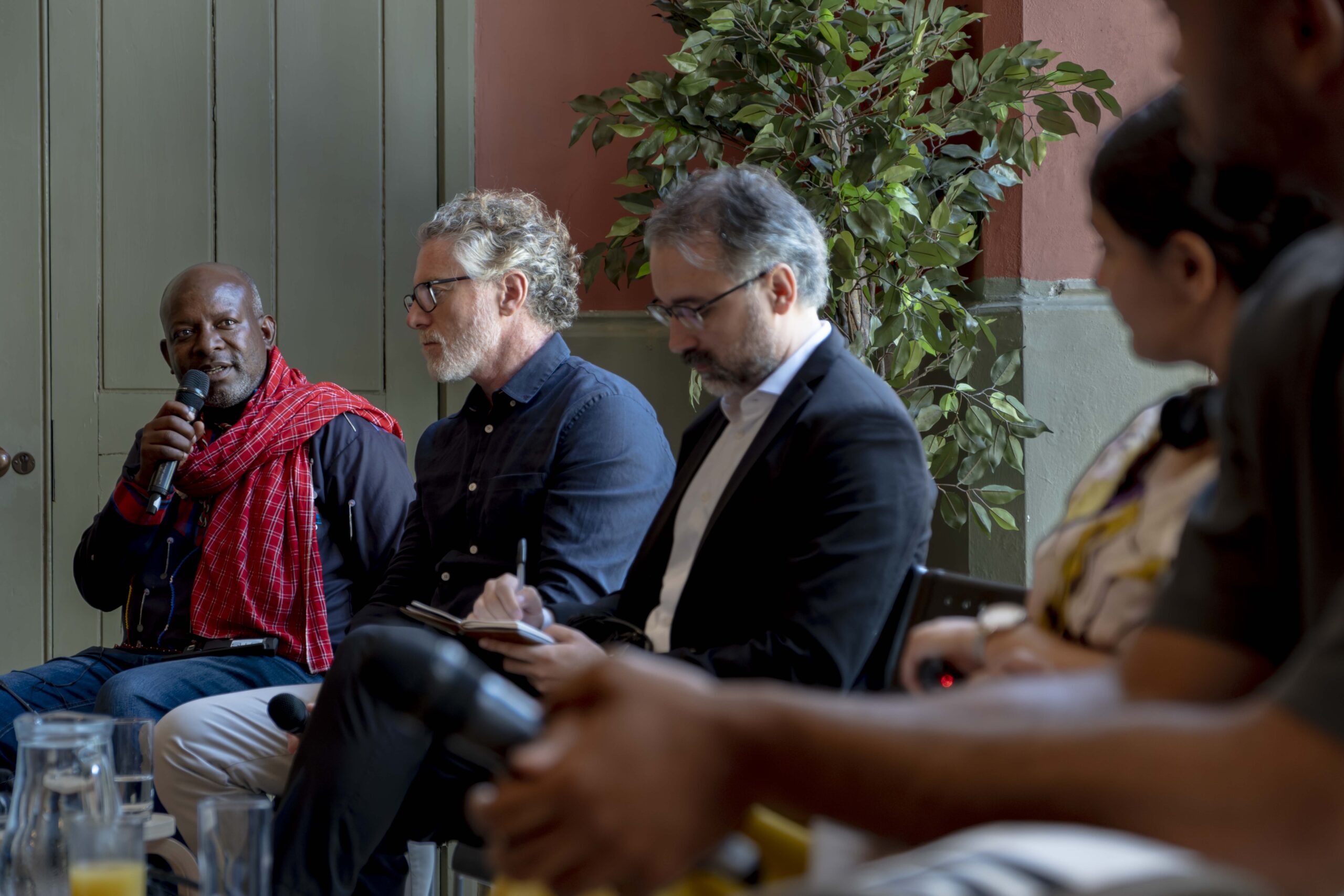
Kaunga shared examples from northern Kenya, where communities have secured collective land rights across more than 1.5 million acres and are restoring degraded landscapes according to their own priorities and governance systems. These efforts recognize landscapes not simply as ecosystems, but as living relatives with names, histories, and cultural meaning.
Rights Must Be Backed by Resources
Throughout the conversation, panelists repeatedly returned to one of the most pressing challenges facing conservation today: while Indigenous Peoples and local communities steward much of the world’s remaining biodiversity, only a small fraction of conservation funding reaches them directly.
Baré argued that reimagining conservation requires reimagining finance itself.
“It’s not enough to finance projects for peoples; you need to finance the mechanisms led by our peoples.”
This call resonates deeply with Global Greengrants Fund’s long-standing commitment to shifting resources and decision-making power directly to grassroots leaders. Through our participatory grantmaking model and decentralized global network, we work to ensure that communities are not simply consulted—they are resourced to lead.
Fernando Bastos, Head of the Environment, Climate and Energy Section at the Embassy of Brazil in London, also presented the Tropical Forest Forever Facility (TFFF) as an attempt to correct a structural imbalance in how forests are valued, including a commitment that 20% of payments go directly to Indigenous Peoples, recognizing their central role in protecting standing forests. This raised important questions about how large-scale conservation finance can remain accountable to Indigenous Peoples and local communities while ensuring resources flow directly to those protecting forests on the ground.
Accountability Is Essential
Panelists stressed that rights are only meaningful when communities can exercise them—and when there are accessible pathways to remedy violations.
Daniel Aguirre of Blue Ventures highlighted the importance of ensuring communities understand their rights, can participate meaningfully in decisions affecting their territories, and have access to grievance mechanisms when those rights are violated. He shared about their work supporting local fishing communities in managing their resources sustainably and explained what a rights-based approach means in practice for the organization.
Participants discussed the UNEP Core Human Rights Principles for Private Conservation Organizations and Funders as an important framework for embedding human rights standards throughout conservation practice. They also emphasized the need for stronger accountability systems designed alongside communities themselves.
As Owen noted:
“Rights protection is only meaningful if people can seek redress.”
Key Takeaways
The conversation surfaced several lessons for funders, conservation organizations, and policymakers:
- Conservation succeeds when communities lead decision-making, not simply participate in consultation processes.
- Securing land, territorial, and resource rights is foundational to effective conservation.
- Direct funding to Indigenous Peoples and local communities remains essential—and insufficient.
- Human rights standards, accountability mechanisms, and accessible grievance processes must become standard practice across the conservation sector.
- Addressing biodiversity loss requires confronting larger systems of extractivism, inequitable investment, and unequal power.
Ultimately, the discussion pointed toward a profound but simple truth:
“Without our rights, without our territories, and without our leadership, conservation will not have a future.” — Josimara Baré
“The future of conservation is not only going to depend on percentages of land and sea that everyone is talking about, how much you protect, but on our ability to build systems that are going to be just and that are going to be equitable and that recognize those people connected with the natural world.” — Nisha Owen
For Mongabay’s Alejandro Prescott-Cornejo, the discussion was a reminder that rights-based conservation is not a side conversation. “It shapes whether conservation is legitimate, whether it lasts, and whether the people most affected by planetary challenges are able to lead in shaping the response,” he said. For Mongabay’s independent environmental journalism, that means continuing to report on nature and planetary challenges while elevating the voices and knowledge of people directly impacted by environmental change.
As climate and biodiversity crises intensify, conservation cannot continue to treat people and nature as separate. The future of conservation depends on shifting power, resources, and decision-making to the Indigenous Peoples and local communities who have safeguarded these territories for generations.
Reimagining conservation through human rights is not an abstract exercise. It is a practical pathway toward a more just, effective, and enduring future for people and planet alike.