
Indigenous Peoples are already solving today’s climate and environmental crises—and the new Global Greengrants Indigenous Peoples Advisory Board provides a powerful model for philanthropy to meaningfully support and partner with Indigenous leaders.
For millennia, from frigid Arctic tundra to lush Congo Basin rainforest, Indigenous Peoples have tended careful relationships with the land, rooted in responsibility to and reciprocity with their fellow inhabitants. They are attuned to ecological cycles of growth and rest, the delicate interconnections between species, and the harmful impacts that can ripple from a single cut tree or oil leak. For many Indigenous peoples, social life is not organized around money; land and ecosystems are not commodities waiting to be harvested for profit, but allies deserving deep reverence. Generations of Indigenous knowledge built around this principle have preserved the delicate climactic and ecological balance across the globe—and still do today. Indigenous governance has long understood what many institutions are only beginning to recognize: healthy communities and healthy ecosystems cannot be separated.
Yet Indigenous wisdom extends beyond environmental stewardship—Indigenous cultures create alternative pathways for social and environmental governance. Indigenous governance honors the crucial interconnections between people, land, and ecosystems. These relationship-centered structures open possibilities for care and restoration that aren’t conceivable within profit-based cultures—care that weaves together everything from art and culture to sky and soil to the vital human interactions that make up daily life. At a time when climate philanthropy is searching for more effective ways to support resilient communities and protect ecosystems, Indigenous leadership offers not only ancient wisdom but living models for the future.
Despite the impactful solutions Indigenous communities offer, they continue to receive only a fraction of global climate finance, while funding decisions are often made far from the communities most affected by environmental change. Too often philanthropy still treats Indigenous Peoples as beneficiaries rather than partners—or as sources of traditional knowledge rather than leaders whose governance systems already offer models for caring for living systems. But Indigenous leadership already has the power, resources, and self-determination to lead the way into futures that are adaptive, restorative, and rooted in knowledge built over centuries. As climate philanthropy, we have a crucial responsibility to not only boost the power and reach of Indigenous-led movements, but to support, preserve, honor, and learn from the relationship-centered systems and cultures at the heart of those solutions.
The Indigenous Peoples Advisory Board: A Decolonial Model of Climate Philanthropy
For over thirty years, Global Greengrants Fund has partnered with Indigenous leaders throughout our advisory network to strengthen Indigenous climate movements globally. The network has long centered the belief that, as those closest to the environmental challenges Indigenous communities face, Indigenous Peoples themselves can best identify emerging threats, trusted organizations already putting forth solutions, and the cultural nuances, political realities, and opportunities invisible to outside funders.
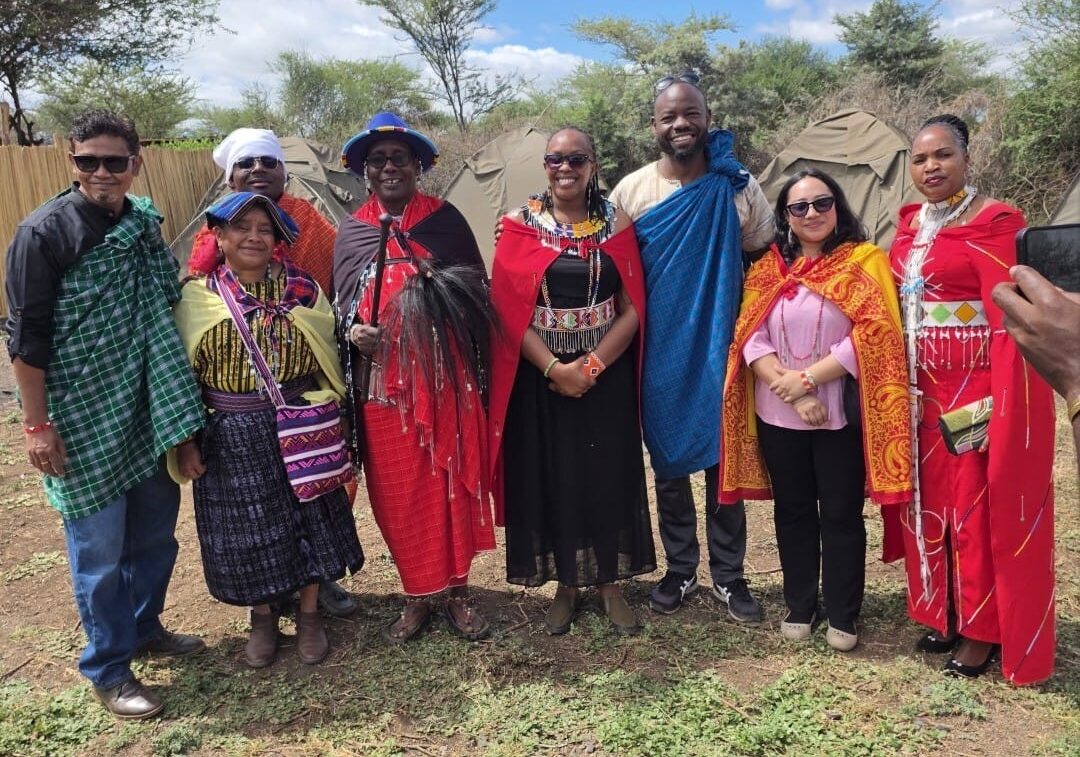
In 2026, we are proud to launch an Indigenous Peoples Advisory Board (IPAB), deepening our commitment to Indigenous autonomy to shape not only where resources flow, but how philanthropy itself evolves. The IPAB—made up of a dynamic collective of Indigenous leaders from Bolivia, Cameroon, Colombia, Guatemala, India, Nepal, Papua New Guinea, and Tanzania who represent the wisdom, self-determination, and diversity of their communities—models traditional Indigenous governance. Through a carefully crafted participatory process, the IPAB puts decision-making about the flow of resources to Indigenous communities in the hands of Indigenous Peoples themselves—centering Indigenous culture and cosmovision to not only transform philanthropy, but also restore balance, sovereignty, and justice for people and nature. This not only improves access to resources, but also repositions Indigenous peoples as decision-makers, interpreters of context, and holders of legitimate knowledge within grantmaking processes. The IPAB’s founding marks a transformative step toward reinforcing Indigenous self-determination, ensuring they have the authority to envision, lead, and shape their own futures.
In its first three pilot grantmaking years, the IPAB made over $700k across more than 70 grants spanning Africa, Asia, Latin America, and the Pacific. The grants support not just “traditional” climate and environmental efforts like conservation, agroecology, and land rights, but also healing, cultural continuity, collective governance, spirituality, and relational forms of community life. Healing the communities who steward the environment is necessary for rebuilding collective life, strengthening organization, and sustaining long-term climate health.
Q+A: Funders as Partners
In the below Q+A, Naomi Lanoi, Global Greengrants Interim Program Coordinator, Earth Impact Area, and co-founder of the IPAB, shares thoughts on the unique wisdom Indigenous Peoples bring to climate movements, and how philanthropy can better partner with Indigenous communities:
What perspectives or approaches do Indigenous Peoples bring to caring for land, water, and community that the wider climate movement still has much to learn from?
Indigenous Peoples do not separate land, water, culture, and community. They are deeply connected. Caring for nature is therefore also about protecting relationships, knowledge, and governance systems that have sustained communities for generations.
For example, IPAB has supported Indigenous Maasai customary leaders in strengthening traditional governance systems in response to decades of land dispossession and marginalization in Tanzania. As conservation policies and external interests continue to put pressure on pastoralist lands, communities are strengthening customary leadership to govern their lands, protect their culture, and defend collective rights.
Indigenous Peoples are not simply beneficiaries of climate solutions. They are knowledge holders and decision-makers with governance systems that have cared for lands and territories for generations.
What does meaningful partnership from philanthropy look like for Indigenous communities?
Meaningful partnership begins when philanthropy stops asking, “What can we do for communities?” and starts asking, “What are communities already doing, and how can we stand behind them?”
For example, we see communities protecting forests, defending rivers, restoring traditional governance systems, and organizing against harmful development long before a funder arrives. The work does not begin with the grant, and it should not end when the grant closes. So meaningful partnership means coming with humility. It means listening before designing, trusting communities to define what matters, providing flexible resources that respond to their realities, and staying alongside them when the journey becomes difficult. It also means recognizing that communities bring something equally valuable to the partnership: knowledge, leadership, relationships, and solutions built over generations. For me, the simplest measure is this: when the funding ends, has the community’s own power become stronger, or have we simply completed a project? That is the difference between funding communities and truly partnering with them.
What opportunity does the IPAB create? What can it teach philanthropy?
From my perspective, the greatest opportunity IPAB creates is the opportunity to journey with communities through participatory grantmaking. Advisors are not sitting far away simply reviewing proposals and making funding decisions. They come from Indigenous communities themselves. They understand the contexts, the struggles, the ways communities organize, and importantly, the ways communities define change. That allows grantmaking to become a process of accompaniment. Advisors listen, build relationships, help communities navigate systems that may be unfamiliar, and stay connected as the work evolves. In that process, communities are not forced to fit themselves into philanthropy. Philanthropy begins to understand and respond to communities. We have seen this open space for work that might otherwise struggle to find funding: traditional governance, healing, spirituality, language, food systems, and intergenerational knowledge.
For me, that is what makes IPAB special. It is not only participatory grantmaking because Indigenous Peoples make decisions about resources. It is participatory because they journey with one another. The relationship is part of the grantmaking. It’s been my best journey of accompaniment.
What conversations do you think philanthropy most needs to be having about Indigenous leadership right now? Is there anything you hope we won’t overlook?
We should not overlook the systems that already hold communities together: customary governance, women and youth leadership, elders, knowledge holders, and community-led institutions. They may not always fit conventional funding structures, but they carry legitimacy, knowledge, and trust.
And we also should not overlook accompaniment. Funding matters, but so do relationships. Perhaps the conversation philanthropy needs to have is very simple: Are we funding Indigenous leadership only when it fits our systems, or are we willing to change our systems to make room for how Indigenous leadership already works?
Can you share an example of Indigenous leadership that the IPAB has supported that has stayed with you? What made that example so powerful?
One example that has really stayed with me is IPAB’s support to Indigenous women lawyers working with survivors of gender-based violence. We often fund communities to defend their rights, and we expect lawyers and human rights defenders to stand beside them through very difficult cases. But rarely do we ask: who is supporting the people who carry these cases? This initiative recognized that legal representation alone is not enough. The Indigenous women lawyers themselves also needed care. The project brought together legal work, psychosocial support, healing, Mayan cosmovision, and connection to Mother Earth, supporting both the women seeking justice and the lawyers accompanying them. This stayed with me because it challenged the way we think about what deserves funding. We readily understand why an emergency worker or other frontline professional may need support because of the work they carry. Human rights defenders and Indigenous lawyers also carry enormous emotional weight.
For me, this is Indigenous leadership in practice. Justice is not only about winning a case. It is also about caring for the people carrying the struggle. And that is something IPAB makes possible: communities can define for themselves what meaningful support looks like, even when it does not fit neatly into conventional grantmaking.
Resources as Relationship: An Opportunity
Climate philanthropy has an opportunity—and responsibility—to invest in Indigenous governance, trust-based relationships, and long-term leadership. The IPAB highlights that Indigenous-led, relational, and culturally grounded grantmaking is both possible and valuable. It provides a powerful model for crafting careful grantmaking partnerships that shift power to the best stewards of our collective web of ecosystems—those that have lived in harmony with them for generations. It invites funders to engage more deeply with how resources enter, circulate, and are governed within communities, laying out a long-term vision of organizational and philanthropic systems change based on respect, relationships, and reciprocity by and for Indigenous Peoples.